
When the River Took Everything: On the Ground After Nepal's August Flash Flood
On August 26, a devastating flash flood tore through river communities across Nepal. Days later, we joined a delegation accompanying the Speaker of the House of Representatives to see the damage for ourselves.
By Unfold Nepal · Affected flood zones, Nepal
The drive in was quiet. Not the kind of quiet that signals peace — it was the kind that follows catastrophe, when a landscape has been stripped of the ordinary sounds of life.
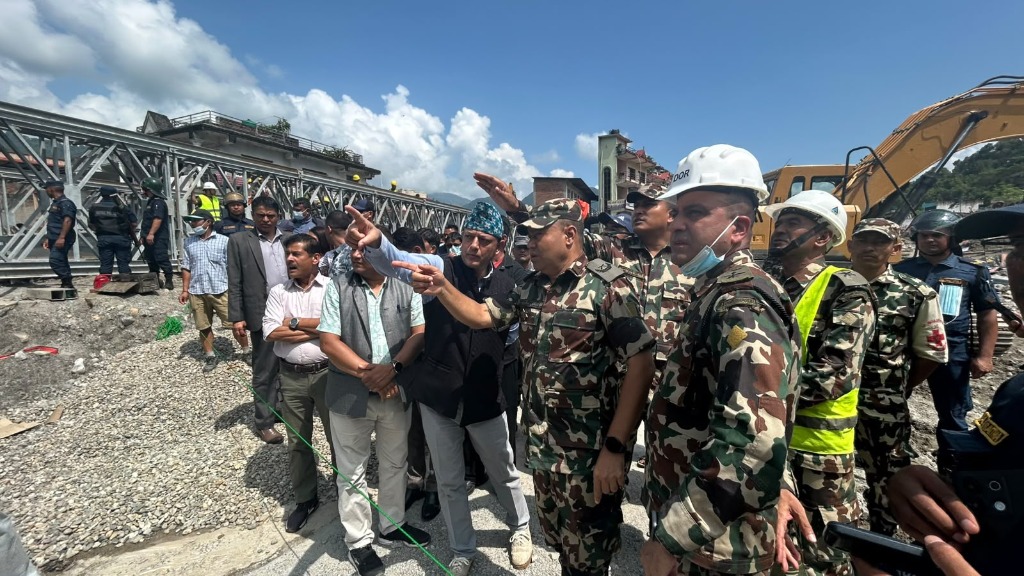
On August 26, 2026, a devastating flash flood tore through communities along Nepal's river corridors, swallowing homes, displacing families, and erasing livelihoods overnight. Days later, we traveled to the affected zones as part of a delegation accompanying the Speaker of the House of Representatives, joining military officials and local authorities for an on-ground assessment of the destruction.
Homes lost overnight
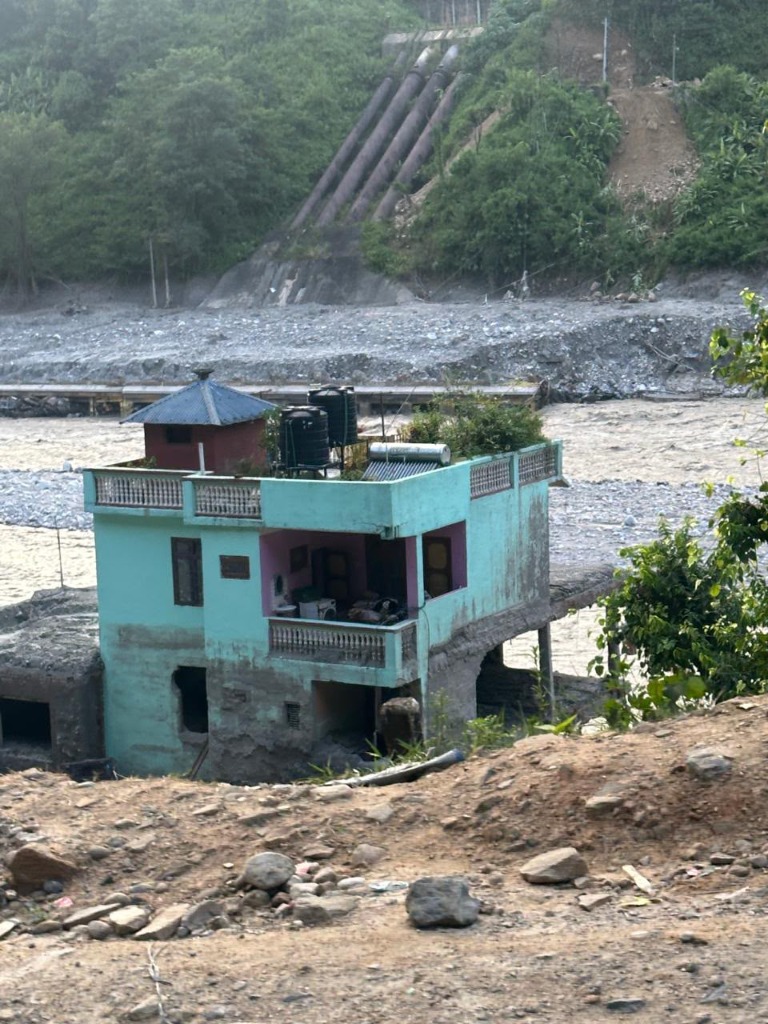
Nothing prepares you for what you see when you arrive. Entire lower floors of buildings had been buried under thick layers of silt and boulders. One house — once somebody's home — stood isolated at the river's edge, its foundation exposed, its interior open to the elements where walls once stood. The water had receded, but the river still churned brown and restless just meters away, as if it hadn't finished yet.
Families in the area had lost more than shelter. Photographs, documents, furniture — all of it gone. Many had fled in the middle of the night with nothing but the clothes on their backs. Some had nowhere to return to. The few who stayed were picking through mud and rubble, trying to salvage what remained.
Businesses wiped out at the worst possible time
Along what used to be a stretch of local market stalls and small shops, heavy excavators worked to clear debris. Storefronts were reduced to frames. Shopkeepers who had spent years building their businesses were left standing in the wreckage with no inventory, no cash flow, and no timeline for recovery.
For a region where commerce depends on the monsoon season, losing the market at peak time is a blow that will be felt well into next year. The flood did not just destroy property — it interrupted income cycles that families had no buffer to absorb.
A visit that carried weight
The Speaker, flanked by army personnel and relief coordinators, moved through the site with urgency — pointing toward collapsed structures, asking questions, taking stock. It was not a ceremonial visit. You could see the weight of it on everyone's face.
What the August 26 flood exposed, once again, is the brutal intersection of geography and vulnerability that Nepal's communities continue to face. The rivers that give life to these valleys are also capable of reclaiming everything in a matter of hours. While relief efforts are underway, the scale of what was lost — in homes, in businesses, in human stability — demands a response that outlasts the immediate crisis.
The water may have gone down. The damage has not.
Want to support communities rebuilding after disasters like this?
Keep reading
More from the field
- Ecosystem & Policy
Building it step by step
A conversation with the Rt. Hon. Speaker of the House of Representatives about returnee entrepreneurship, and the advice that is now shaping how we plan the years ahead.